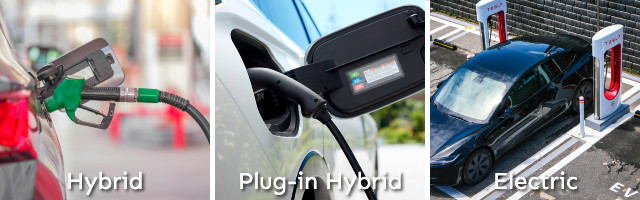
Understanding the practical differences between hybrid vs plug-in hybrid vs electric vehicles is crucial for making informed fleet decisions.
The electrification of business vehicles is no longer a question of “if” but “when” and “which technology.”
With the EV market experiencing significant shifts and businesses reassessing their vehicle strategies, understanding the practical differences between hybrid vs plug-in hybrid vs electric vehicles is crucial for making informed fleet decisions.
Each technology offers distinct advantages and challenges, particularly when it comes to operational costs, infrastructure requirements, and employee management.
The choice isn’t just about environmental credentials – it’s about finding the right balance between cost savings, operational flexibility and administrative simplicity for your business.
Hybrid vs Plug-in Hybrid vs Electric: Understanding the 3 Technologies
Hybrid vehicles combine a petrol engine with an electric motor and small battery. The electric motor assists during acceleration and low-speed driving, while regenerative braking captures energy to recharge the battery.
Crucially, you never need to plug in a hybrid – it operates just like a conventional vehicle whilst delivering superior fuel economy.
Plug-in hybrid electric vehicles (PHEVs) take this concept further with a larger battery that can be charged from an external power source. This allows for electric-only driving for shorter distances (typically 50-80 kilometres) before the petrol engine takes over.
Think of it as an electric car that can never run out of charge.
Fully electric vehicles (EVs) run entirely on battery power with no petrol engine backup. They must be charged from external sources and offer the lowest running costs, but require careful planning for longer journeys and comprehensive charging infrastructure.
For a full rundown of every EV available, see our comprehensive guide: Every Fully-Electric Vehicle (EV) On Sale in NZ in 2026 »
The Business Case for Each Technology – Hybrid vs Plug-in Hybrid vs Electric
Hybrid Vehicles: The Reliable Choice

For businesses seeking immediate fuel savings without operational changes, hybrids present the most straightforward solution. A typical hybrid can achieve fuel consumption of around 4 litres per 100 kilometres compared to 8-10 litres for equivalent petrol vehicles.
The business advantages are compelling. There’s no need to install charging infrastructure, no range anxiety for employees, and maintenance requirements remain familiar.
From an administrative perspective, hybrids eliminate the complexity of managing charging reimbursements or calculating electricity usage for FBT purposes.
Toyota’s hybrid technology, refined over more than two decades, has proven particularly reliable in business applications. This reliability translates to predictable running costs and strong resale values – crucial considerations when calculating total cost of ownership.
However, hybrids still rely on fossil fuels and produce emissions, which may not align with corporate sustainability goals.
Plug-in Hybrids: The Compromise Solution
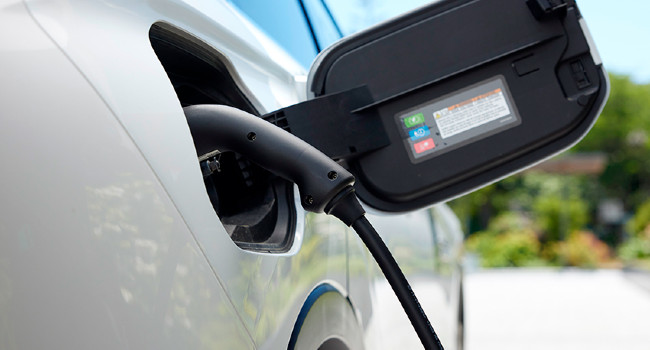
PHEVs attempt to bridge the gap between conventional and electric vehicles, but this middle ground creates both opportunities and complications for businesses.
On the positive side, employees can complete most daily commutes on electric power alone, potentially eliminating petrol consumption for routine business use.
When charged regularly, a PHEV can operate at a fraction of the cost of petrol vehicles whilst maintaining the flexibility for longer journeys without charging stops.
The challenges become apparent in business applications.
Companies face decisions about installing workplace charging stations and managing home charging arrangements for employees. This creates administrative complexity around electricity reimbursements and FBT calculations that many businesses find burdensome.
There’s also the risk of reduced benefits if employees don’t charge regularly. An uncharged PHEV becomes a heavier, less efficient hybrid carrying around an unused battery pack.
Electric Vehicles: The Ultimate Efficiency Play
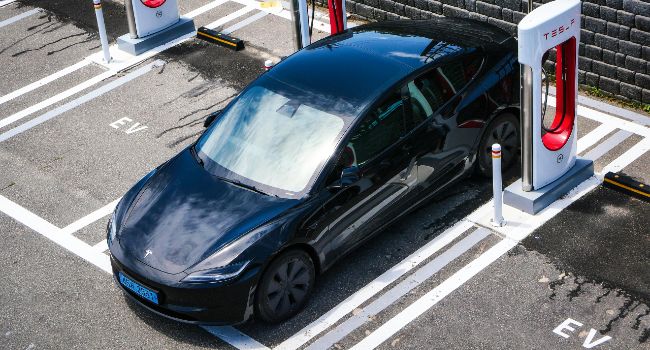
EVs offer the lowest running costs of any vehicle technology. Electricity is significantly cheaper than petrol, and maintenance requirements are minimal with no oil changes, fewer moving parts, and regenerative braking that extends brake life.
For businesses with predictable, shorter-range vehicle usage, EVs can deliver substantial cost savings.
The driving experience is also superior – quiet, smooth and responsive with instant torque delivery.
However, the business challenges are significant.
Range limitations require careful route planning, and charging infrastructure needs are substantial. The upfront cost remains higher than alternatives, and resale values are uncertain as technology evolves rapidly.
Perhaps most critically for business applications, EVs require comprehensive charging strategies. This often means arranging home charging for employees, managing workplace charging stations, and dealing with complex FBT implications.
The Infrastructure Challenge
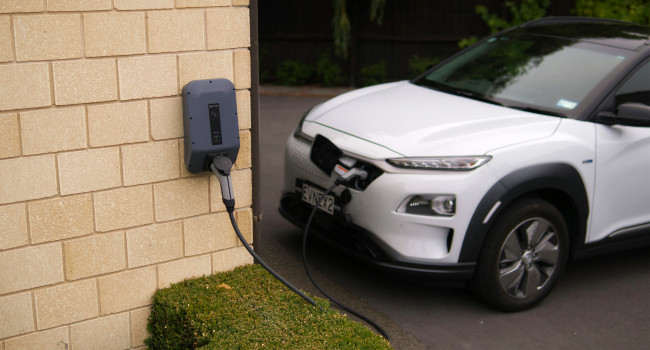
One of the biggest practical considerations for businesses is charging infrastructure. While hybrids require no changes to existing operations, both PHEVs and EVs create new administrative burdens.
Companies are finding that providing charging solutions for employees is more complex than initially anticipated.
Home charging installation can cost several thousand dollars per employee, and determining fair reimbursement rates for electricity usage creates ongoing administrative work.
Workplace charging presents its own challenges.
Multiple employees needing to charge simultaneously requires significant electrical infrastructure investment, and managing access and costs becomes an operational consideration.
Tax Implications
The FBT implications of different vehicle technologies vary significantly. Hybrid vehicles are treated like conventional vehicles for FBT purposes, making calculations straightforward.
With EVs and PHEVs, the FBT treatment of charging benefits can be complex, particularly when employees charge at home and seek reimbursement.
Making the Right Choice for Your Business

The hybrid vs plug-in hybrid vs electric vehicle decision should align with your business’s specific circumstances and priorities.
Choose hybrids if you want immediate fuel savings without operational changes, have employees who drive long distances regularly, or prefer to avoid charging infrastructure complications.
They’re particularly suitable for businesses wanting proven technology with predictable costs.
Consider plug-in hybrids if your employees have short, predictable commutes, you’re willing to invest in charging infrastructure, and you want to reduce fuel consumption significantly whilst maintaining operational flexibility.
However, be prepared for increased administrative complexity.
Select electric vehicles if your business has shorter-range, predictable vehicle usage, you’re committed to zero emissions, and you can manage the infrastructure and administrative requirements.
EVs work best when you can control the charging environment and usage patterns.
The Practical Reality
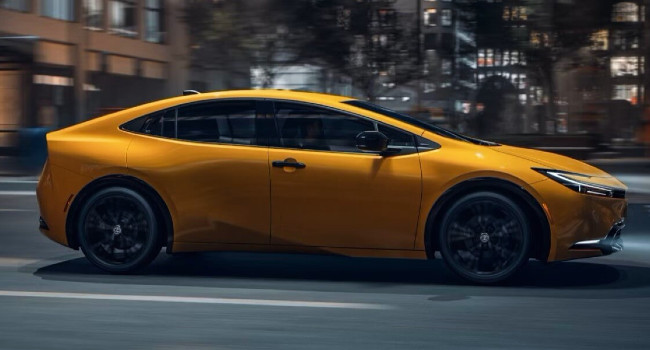
Many businesses find that hybrids offer the optimal balance of fuel savings, operational simplicity, and cost predictability. They deliver significant improvements over conventional petrol vehicles without requiring infrastructure investment or creating administrative complexity.
While EVs represent the future of transportation, the current challenges around infrastructure, range and resale values make them suitable primarily for businesses with specific usage patterns and strong sustainability commitments.
The electrification journey doesn’t have to be all-or-nothing. Many successful fleet strategies involve using different technologies for different roles – hybrids for sales representatives who drive long distances, EVs for local passenger vehicle use and local delivery applications.
The key is matching vehicle technology to actual business needs rather than following the latest trend.
With careful analysis of your usage patterns, infrastructure capabilities and administrative preferences, you can select the right mix of technologies to optimise both costs and operations for your business.
