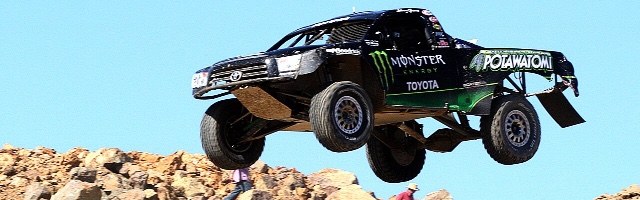
Ask five ute owners what the “best” ute is and you’ll get five confident, completely different answers. That’s because the badge on the tailgate matters a lot less than what you’re actually asking the vehicle to do.
A business might care most about payload, towing and running costs. A private buyer might care more about comfort, safety tech or whether it can double as the family car on weekends. Both are right — they’re just answering different questions.
For 2026, here’s where we’ve landed:
- Ford Ranger: Best overall choice
- Toyota Hilux: Practical and proven choice.
- Mitsubishi Triton: Value-focused diesel workhorse.
- Nissan Navara: New-generation diesel all-rounder.
- BYD Shark 6: Preferred electric option.
These are Driveline’s editorial picks, not a claim that they’re the five highest-selling utes — though as it happens, three of them are. According to Driven’s report of Motor Industry Association data, the Ford Ranger led New Zealand ute registrations through 30 June 2026 with 4,914 registrations, followed by the Toyota Hilux with 3,663 and the Mitsubishi Triton with 1,932.
You can also browse the current ute range available through Driveline.
How we picked these five
We weighed:
- Current availability in New Zealand.
- Model, cab and body-style choice.
- Payload and towing capability.
- Engine or powertrain options.
- Suitability for work and recreational use.
- Safety and driver-assistance technology.
- Everyday practicality.
- The type of buyer each ute is best suited to.
This isn’t a lab test or a track shootout. It’s a practical buyer’s guide based on what’s actually available in NZ, manufacturer specs and our own experience where we’ve driven the current model.
That’s worth being upfront about: our Hilux, Triton and Navara road tests cover earlier generations of these utes, so we’ve kept them further down as historical reading rather than dressing them up as evidence of how the 2026 models drive. Our Ranger Hybrid and Shark 6 coverage, on the other hand, is current and genuinely informs what we say about those two below.
Best utes in NZ 2026 at a glance
↔ Swipe left and right to see the full table
| Ute | Our category | Verified highlight | Main consideration |
|---|---|---|---|
| Ford Ranger | Best overall | Ranger Hybrid: up to 3,500kg braked towing and up to 973kg payload | Capability varies significantly by variant |
| Toyota Hilux | Practical and proven choice | SR5 Hybrid: 150kW, 500Nm and up to 3,500kg braked towing | The 48-volt system is a mild hybrid, not a plug-in hybrid |
| Mitsubishi Triton | Value-focused diesel workhorse | 150kW, 470Nm and up to 3.5 tonnes braked towing | Less powertrain variety than the Ranger |
| Nissan Navara | New-generation diesel all-rounder | 150kW, 470Nm and up to 3,500kg braked towing | The five-star ANCAP rating applies to dual-cab variants |
| BYD Shark 6 | Electrified choice | Premium: 321kW/650Nm and 2,500kg towing; Performance: 350kW/700Nm and 3,500kg towing | Premium and Performance specifications differ materially |
One thing worth keeping in mind: These numbers apply to specific variants, not every ute wearing the same badge. A Raptor’s tow rating isn’t automatically the same as that of the Ranger you’re looking at.
1. Ford Ranger: Best overall ute
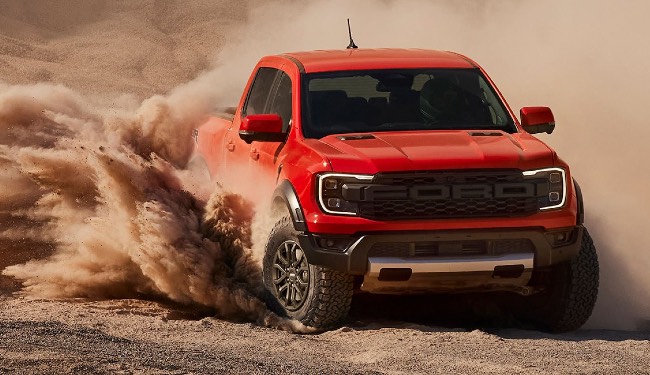
There’s a reason every other ute on this list gets measured against the Ranger, and it isn’t just sales figures. It’s the range of what one nameplate can cover.
It led New Zealand ute registrations during the first half of 2026, but the number that matters more to you is the range: work-focused cab-chassis vehicles, diesel double cabs, premium lifestyle versions, the high-performance Raptor and plug-in hybrid models, all wearing the same badge.
See Driveline’s current Ford Ranger lease and finance options.
Why we keep coming back to the Ranger
Few competitors cover this many jobs within one model family. A fleet manager can spec a no-frills work truck, while someone chasing comfort, off-road capability, outright performance or plug-in running has a genuine alternative in the same range.
That breadth is also the catch. Towing capacity, payload, drivetrain, fuel use and equipment swing wildly between two Rangers — so if a mate tells you “the Ranger tows 3.5 tonnes,” ask them which one, because that’s not automatically true of the one you’re looking at.
Ranger Hybrid: capability plus mobile power
Ford New Zealand states that applicable Ranger Hybrid models offer:
- Up to 3,500kg braked towing capacity.
- Up to 973kg payload.
- An 11.8kWh usable battery.
- Up to 6.9kW of Pro Power Onboard output, depending on variant and configuration.
- Official combined fuel consumption of 2.8L/100km under WLTP3.
Worth knowing: that payload figure includes occupants, cargo, accessories, added structures and tow-ball download, and maximum towing may require a genuine Ford tow pack. Load it up carelessly and you can eat into your gross vehicle mass (GVM) and gross combined mass (GCM) limits faster than the spec sheet suggests.
Our own Ford Ranger Hybrid analysis from 2025 is where the spec sheet actually comes to life. We were genuinely surprised by how quiet and smooth the electric motor made low-speed driving around town, and Pro Power Onboard turned out to be one of those features you don’t realise you need — until you’re running tools off the tray with no generator in sight.
That’s our real-world impression of the Ranger Hybrid, rather than a controlled fuel or towing test.
Best suited to
Put a Ranger on your shortlist if you’re:
- Running a fleet that needs several cab or body configurations.
- Towing regularly, not just occasionally.
- Trying to make one vehicle do work duty and family duty.
- Heading off-road more weekends than not.
- Able to actually plug in a hybrid regularly — otherwise you’re paying for capability you won’t use.
- Working somewhere a power outlet would be genuinely useful.
Things to check before you order
Nail down the exact model’s:
- Payload once accessories and bodywork are fitted, not the brochure figure.
- GVM, GCM and axle limits.
- Towing package requirements.
- Drivetrain and off-road equipment.
- Realistic charging pattern, if you’re eyeing the plug-in hybrid.
2. Toyota Hilux: Practical and proven choice
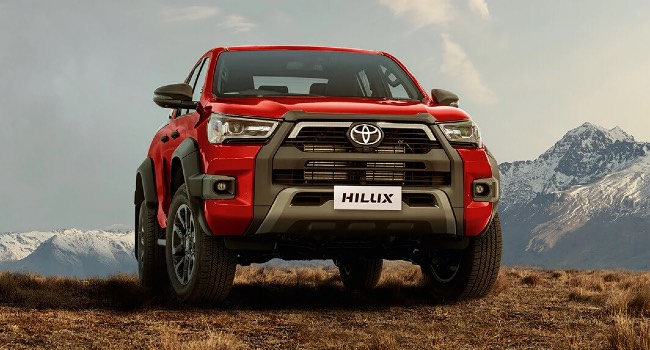
The Hilux doesn’t try to be everything to everyone — and that’s exactly why it works. It was the country’s second-highest-registered ute through June 2026, and it’s earned that spot the boring way — by being dependable, year after year.
The range goes well beyond the double cabs most people picture: depending on availability, you can spec commercial cab and body configurations purely for work, or step up to better-equipped models for a mix of business, family and weekend use.
See Driveline’s current Toyota Hilux lease and finance options.
Get a quoteView Toyota Hilux options
Lease from $715 + GST per month — indicative pricing for the entry-level Hilux SR, based on a 48-month business-use lease. Lease pricing changes with the exact model, term and spec, so ask us for the current monthly rate via Driveline’s Toyota Hilux page.
Hilux SR5 Hybrid specifications
Toyota New Zealand currently lists the Hilux SR5 Hybrid 4WD Double Cab with:
- A 2.8-litre turbo-diesel engine.
- 150kW of power.
- 500Nm of torque.
- A six-speed automatic transmission.
- Up to 3,500kg braked towing capacity.
- Official combined fuel consumption of 8.3L/100km using a 3P-WLTP conversion.
That’s the SR5 Hybrid specifically, not a blanket claim for every Hilux on the lot.
Why the Hilux stands out
If you want a practical commercial range wrapped in a name people already trust, the Hilux is hard to look past.
Just don’t mistake the 48-volt system for a plug-in hybrid — it isn’t one. It assists the diesel and takes some of the strain off, but you can’t plug it in, and it won’t give you the electric-only running you’d get from a Ranger Hybrid or a Shark 6. Different tool for a different job.
Best suited to
The Hilux earns its keep with:
- Tradespeople and fleet operators who want commercial configuration choice.
- Buyers who’d rather stick with a known quantity than a novelty.
- Drivers wanting diesel with a bit of mild-hybrid assistance, without going all-in on a plug-in vehicle.
Things to check before you order
Compare the exact cab, body, drivetrain and transmission carefully — a bare cab-chassis work ute and a loaded double cab can differ wildly in payload, comfort, weight and cost, despite sharing a name.
3. Mitsubishi Triton: Value-focused diesel workhorse
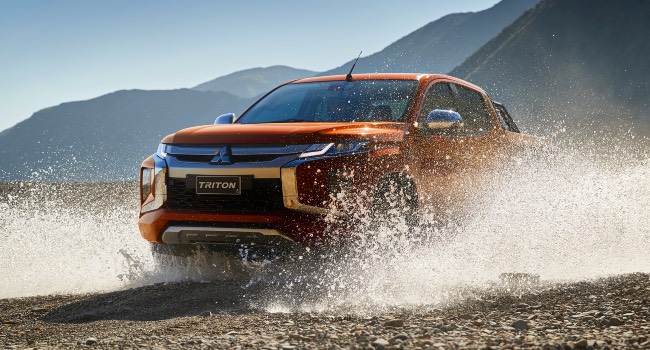
The Triton was New Zealand’s third-highest-registered ute through June 2026, and we think it’s the most underrated ute on this list.
It doesn’t chase variety — it focuses on what most commercial buyers actually need: diesel torque, useful load-carrying, four-wheel drive, and a 3.5-tonne maximum braked towing claim on applicable models.
See Driveline’s current Mitsubishi Triton lease and finance options. That page mixes model-year listings, so get a firm quote on the exact vehicle rather than relying on a general listing price.
Get a quoteView Mitsubishi Triton options
Lease from $649 + GST per month — indicative pricing for the entry-level Triton GLX, based on a 48-month business-use lease. Monthly lease pricing depends on the exact model, term, and spec, so get in touch for a current rate via Driveline’s Mitsubishi Triton page.
Mitsubishi Triton specifications
Mitsubishi Motors New Zealand currently lists:
- A 2.4-litre intercooled bi-turbo diesel engine.
- 150kW of power.
- 470Nm of torque.
- Official combined fuel consumption of 8.6L/100km.
- Up to 3.5 tonnes of braked towing capacity.
- A stated payload of approximately one tonne on applicable configurations.
As always, payload and towing depend on the cab, tray, drivetrain, accessories and mass limits you’re actually working with.
Why we rate it
The Triton doesn’t try to match the Ranger’s sprawling range — and that’s arguably a strength rather than a shortcoming. There’s less to overthink, and more room to focus on getting the body and equipment right for the job.
We call it value-focused rather than “cheapest,” because that changes with discounts, fleet terms and whatever gets bolted on afterwards. Compare like-for-like completed vehicles, not sticker prices in isolation.
Best suited to
Look at the Triton if you’re:
- Running trades or service fleets.
- After solid, conventional diesel towing without the fuss.
- Trying to avoid drifting into a premium grade you don’t need.
- Weighing up whole-of-life cost rather than just the purchase price.
4. Nissan Navara: New-generation diesel all-rounder
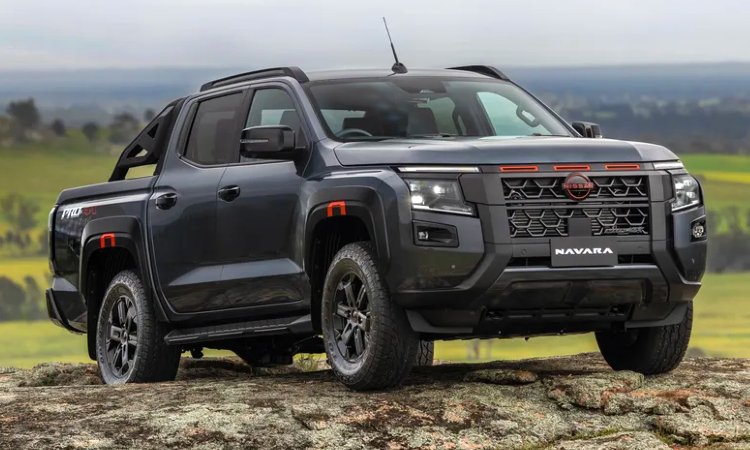
We think the latest Navara flies under the radar simply because most buyers haven’t caught up with how much it’s changed. It gives buyers a genuinely new-generation diesel alternative, spanning work-focused and higher-spec dual-cab models.
See Driveline’s Nissan Navara lease and finance options. That page still carries previous-generation stock alongside the new model, so double-check any quote is actually for the 2026 2.4-litre version described below.
Get a quoteView Nissan Navara options
Lease from $641 + GST per month — indicative pricing for the entry-level Navara SL, based on a 48-month business-use lease. The monthly figure will vary depending on the model, term and spec, so ask us for the latest pricing via Driveline’s Nissan Navara page.
Nissan Navara specifications
Nissan New Zealand lists the current Navara with:
- A 2.4-litre four-cylinder intercooled bi-turbo diesel engine.
- 150kW of power.
- 470Nm of torque.
- A six-speed automatic transmission.
- Up to 3,500kg maximum braked towing capacity.
- Approximately one tonne of payload on applicable variants.
- Official 4×4 combined fuel consumption of 7.7L/100km under ADR81/02.
That payload shrinks fast once occupants, cargo, bodywork, accessories and tow-ball load get added — same story as every other ute here.
Navara ANCAP rating
ANCAP gives the current Navara a five-star safety rating, tested in 2024, applying to all dual-cab variants. Worth knowing: ANCAP based that rating on testing of the closely related Mitsubishi Triton, plus technical information and extra test data supplied specifically for the Navara.
Why it’s on our list
The Navara pairs genuinely competitive diesel output with the towing and payload numbers you’d expect from a serious one-tonne ute. If you’re replacing an older Navara, or simply comparing current-generation diesels without wanting to commit to a plug-in hybrid, it deserves a proper look.
Best suited to
The Navara makes sense for:
- Businesses retiring an older diesel ute.
- Buyers who specifically want a current-generation model.
- Anyone balancing towing, payload and everyday livability.
- Recreational buyers eyeing the higher-spec ST-X or Pro-4X.
5. BYD Shark 6: Preferred electric option
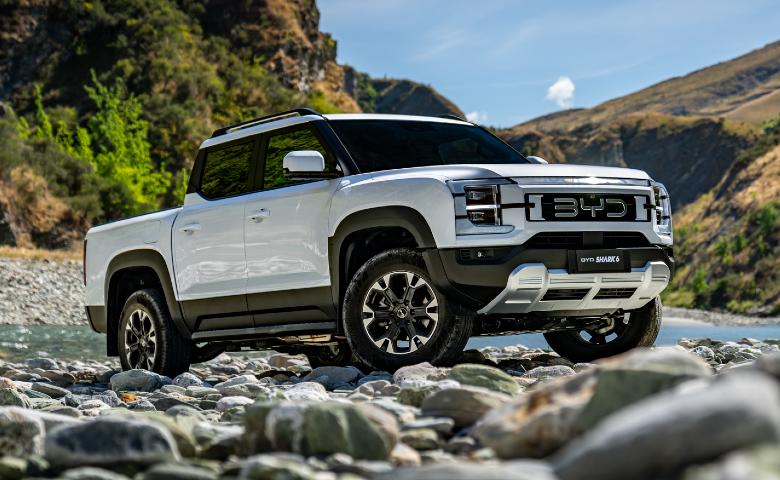
A few years ago, “electrified ute” would’ve sounded like a contradiction to most Kiwi buyers. The Shark 6 is the vehicle that’s quietly making the case otherwise — plug-in hybrid operation, solid combined power, and the ability to run tools straight off the tray.
See Driveline’s current BYD Shark 6 lease and finance options.
Get a quoteView BYD Shark 6 options
Lease from $1,164 + GST per month — indicative pricing for the Shark 6 Cab Chassis, based on a 48-month business-use lease. Your monthly lease rate will depend on the model, term and spec, so talk to us for an up-to-date figure via Driveline’s BYD Shark 6 page.
BYD Shark 6 Premium
BYD New Zealand lists the Premium with:
- 321kW combined power.
- 650Nm combined torque.
- A 29.6kWh battery.
- 2,500kg maximum braked towing capacity.
- A claimed electric range of up to 100km under NEDC.
- Claimed 0-100km/h acceleration in 5.7 seconds.
BYD Shark 6 Performance
The newer Shark 6 Performance isn’t just a badge upgrade — it’s a materially different vehicle:
- 350kW combined power.
- 700Nm combined torque.
- 3,500kg maximum braked towing capacity.
- A claimed electric range of up to 80km under WLTP.
- Claimed 0-100km/h acceleration in 5.5 seconds.
Don’t assume the Premium tows what the Performance does — 2,500kg versus 3,500kg is a meaningful gap if you’re hitching up a boat.
What our own review adds
Lance Manins’ 2024 personal BYD Shark 6 review covered the Launch Edition Premium — not the Performance model above — and honestly, it reads more like an SUV review than a ute one:
- A cabin that felt more like a premium SUV than a traditional work ute.
- A 15.6-inch rotating touchscreen.
- Vehicle-to-load outlets in the tray for compatible tools or equipment.
- Mud, Sand and Snow drive modes.
- Double-wishbone suspension at the front and rear.
That’s the kind of thing you only pick up by actually driving one — a spec sheet won’t tell you how upmarket the cabin feels. Just don’t assume the Performance model matches it feature-for-feature; the equipment and calibration can differ.
Best suited to
The Shark 6 is worth a serious look if you:
- Have reliable overnight or depot charging.
- Do mostly local, repeatable journeys.
- Want strong performance without giving up plug-in running.
- Would actually use vehicle-to-load power.
- Need the 3,500kg-rated Performance specifically — don’t settle for the Premium if that’s your must-have.
Things to check before you order
A plug-in hybrid only pays off if you actually plug it in. Compare your real route pattern, daily distance, payload, towing and charging access — not the laboratory fuel figure, which assumes a best-case charging routine most people don’t stick to.
Our hybrid, plug-in hybrid and electric vehicle guide breaks down the practical differences if you’re still weighing it up.
What matters more than a headline towing or payload figure
1. Payload after the ute is fitted out
The advertised payload figure is the best-case scenario, before real life gets involved. That number has to cover:
- The driver and passengers.
- Canopies, service bodies and trays.
- Drawers, toolboxes and racking.
- Tow bars and tow-ball download.
- Roof racks and carried equipment.
- Tools, stock and other cargo.
We’ve seen a “one-tonne” ute left with barely enough spare capacity for a chilly bin once it’s properly kitted out for work.
Our guide to planning a complex ute fit-out covers trays, canopies, toolboxes, drawers, racks and service bodies — and why you should plan the vehicle and the fit-out together, not as two separate decisions.
2. Towing capacity isn’t the whole equation
A 3,500kg towing rating sounds simple until you realise it doesn’t mean you can tow 3,500kg and carry a full payload at the same time. Something has to give.
Check:
- Gross vehicle mass.
- Gross combined mass.
- Front and rear axle limits.
- Tow-ball download.
- The weight of occupants and accessories.
- Manufacturer towing-package requirements.
If towing or load safety is genuinely on the line, confirm the completed vehicle’s limits in the manufacturer’s documentation and get specialist advice rather than doing the maths on the back of an envelope.
3. Match the powertrain to how you’ll actually drive
A diesel still makes the most sense for long-distance, remote or heavy-load work — no amount of clever marketing changes that. A plug-in hybrid earns its keep when it goes home to a charger and does the same local loop day after day.
Run your own numbers through Driveline’s 2026 EV, petrol and hybrid driving-cost calculator rather than trusting a combined figure based on driving patterns that likely don’t match your own.
4. Compare whole-of-life cost, not just the monthly payment
Two utes with the same sticker price can end up costing very different amounts once term, distance, deposit, residuals and fitted equipment are factored in.
Our vehicle leasing guide covers the basic structures, and our piece on second-time business car leasing walks through a real-world Ranger example — useful for understanding the shape of the decision, though treat it as illustrative rather than a quote you can bank on.
Earlier Driveline ute reviews: useful historical context
We’ve also covered the Hilux, Triton and Navara in years past:
Good background reading on how far these utes have come — but they’re describing previous generations, so don’t lean on them for 2026 power, safety, fuel or driving-performance claims.
A proper current-generation Hilux, Triton and Navara comparison is genuinely on our list to do next.
Which is the best ute in NZ in 2026?
If we had to pick just one, it’s the Ford Ranger — the breadth of commercial, lifestyle, performance and plug-in hybrid configurations is hard for anyone else to match.
But “best overall” isn’t the same as “best for you”:
- Choose the Toyota Hilux if you want a broad, practical, familiar commercial ute.
- Choose the Mitsubishi Triton if you want a straightforward diesel workhorse without the extras.
- Choose the Nissan Navara if you want a genuinely current-generation diesel alternative.
- Choose the BYD Shark 6 if plug-in running actually fits your routes and charging setup.
The right call comes down to the exact variant, the completed fit-out and the job in front of you — not the badge.
Fuel-consumption figures require context
Fuel figures need a bit of context. These numbers come from different test standards, so the lowest figure on paper won’t necessarily mean the lowest real-world fuel use.
Load, towing, accessories, journey length, speed, terrain, temperature and charging habits all move the needle, especially for plug-in hybrids, where fuel use depends heavily on how often the vehicle actually gets charged.
Frequently asked questions
What is New Zealand’s highest-selling ute in 2026?
The Ford Ranger led New Zealand ute registrations through 30 June 2026 with 4,914 registrations, according to Driven’s report of Motor Industry Association data.
The Toyota Hilux was second with 3,663, followed by the Mitsubishi Triton with 1,932.
Which of these utes can tow 3,500kg?
Applicable versions of the Ford Ranger, Toyota Hilux, Mitsubishi Triton and Nissan Navara are rated to tow up to 3,500kg with a braked trailer.
The BYD Shark 6 Performance is also rated to 3,500kg. The Shark 6 Premium and Cab Chassis are rated to 2,500kg.
Always verify the exact variant and the complete GVM, GCM, axle and tow-ball calculations before you hitch up.
Which ute has the best fuel economy?
Honestly, there’s no single clean answer here — the figures in this article come from entirely different test procedures and different powertrain types.
The right answer for your business depends on distance, route, load, towing and, for a plug-in hybrid, how disciplined you actually are about charging it.
Is a plug-in hybrid ute suitable for business use?
It can be — especially if the ute goes home to a depot or house charger and does predictable local runs.
A diesel still wins for continuous long-distance work, remote jobs, maximum-load operation, or anywhere reliable charging isn’t a given.
What should a business compare before choosing a ute?
Compare:
- Payload after bodywork and accessories.
- Braked towing capacity.
- GVM, GCM and axle limits.
- Tow-ball download.
- Annual distance and route pattern.
- Fuel, electricity and road-user costs.
- Servicing and likely downtime.
- Safety and driver requirements.
- Lease or finance structure.
- Replacement cycle and expected residual value.
Need help choosing, fitting out or financing a ute?
A spec sheet tells you what a vehicle is rated to do on paper. The right ute for your business depends on your routes, your loads, your drivers, your accessories, and how long you plan to keep it — and that’s a conversation, not a brochure.
Contact the Driveline team or call 0800 275-374 to talk through suitable models, lease or finance options and equipment such as canopies, tow bars, roof racks, trays and service bodies.
Sources
Current specifications and registration information were checked against:
- Driven: New Zealand new-vehicle registrations, June 2026
- Ford New Zealand: Ranger Hybrid
- Ford New Zealand: current Ranger range
- Toyota New Zealand: Hilux SR5 Hybrid
- Mitsubishi Motors New Zealand: Triton
- Nissan New Zealand: all-new Navara
- ANCAP: Nissan Navara safety rating
- BYD New Zealand: Shark 6
- BYD New Zealand: Shark 6 Performance announcement
